

The Truth Behind Hormone Replacement Therapy
Women deserve Accurate Menopause Information
My understanding after 43 years of menopause clinic, initiated in 1981 at Catholic University Leuven (KU Leuven) Belgium.

My History of hormone replacement therapy
After having introduced the radio-immuno-assays of gynaecological hormones (LH, FSH prolactin, estrogens, etc.) at KU Leuven, I discussed ‘Hormone Replacement Therapy’ (HRT) as the final step of my ‘Aggregaat’ (later replaced by the easier PhD) on steroid chemistry and peritoneal fluid in women. The concept was to replace the hormones women had stopped making after menopause, similar to the use of glasses to read or insulin for diabetes. Because of an enthusiastic Belgian press, my chairman then asked to start a menopause clinic at KU Leuven, which was the first on the continent and shortly after Cape Town (W. Utian) and London (J. Studd).
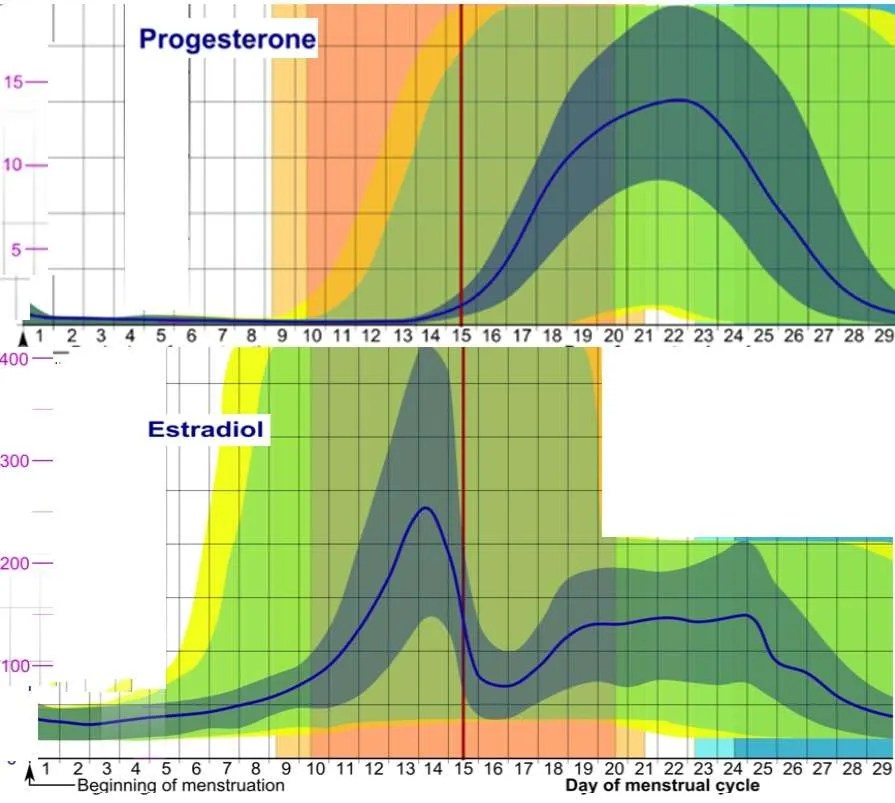
Initially, hormone replacement was given together with psychological counselling, but within two years, we gave hormone replacement and evaluated after 6 months. Together with Shering, I developed several products, such as Climen, and we realised that bioavailability and hormone effects were highly variable among women. Before menopause, the plasma concentrations are highly variable as shown. Similarly, a 1 mg of hormones resulted in plasma concentrations that varied at least 4 times in individual women,  and the effect of the same concentrations varied even more. An example is that below 50 to 80 pg/ml, most women have vasomotor symptoms, but that >180pg/ml are needed for all women to be symptom-free. Therefore, individualisation of therapy was necessary for the dose, the type and the regime of administration of estrogens and progestins. A consequence of this variable bioavailability, is that all available combination products are designed for the average woman with low normal estrogens (to avoid estrogen side effects such as thrombosis) and an overdose of progestins (to have a sufficient progestin effect on the endometrium in all women).
The use of HRT increased explosively in the 1980s and simultaneously the many advantages became documented. However, with increasing use, some fundamental problems of medicine emerged.
- The available combination products for HRT are evaluated by the average effect in the average woman. Thus, half of the women received too much, and the other half did not receive enough.
- The industry can bring only one or a few products to the market because of the strict rules of registrations. This is incompatible with the individualisation of doses and products.
- Without a solid knowledge of endocrinology and without experience, individualisation becomes an endless ‘try this, and try that……’ without guidance.
- A major problem is the shoe shop syndrome, as I described as a cardinal sin for endometriosis surgery. All shoe shops sell shoes, but only from their shop. Similar to surgery, referrals for menopause are inadequate.
- Evidence-based medicine (EBM) also hampered HRT since trials investigate the average effect in the average woman, which is the opposite of individualisation
- Many oncologists and the patients overall mis-interpreted the accelerated growth of existing breast cancer as ‘more cancers’.
- Insufficient competence makes doctors insecure and out of prudence the give minimal doses for a short time.
- Although mental tonic effect or feeling good is the most important, this is more difficult to investigate conclusively, since requiring large groups and since close to impossible to investigate individualisation.
- The WHI study caused massive misinformation as discussed more than 20 years ago. However, a RCT in older (68y) severely obese women (>80kgr) without complaints is a very specific group, and the results are only valid for that group and cannot be extrapolated to the population. Yet, it became an argument for many for not supporting HRT, and maybe an alibi for not referring patients.
Unfortunately, my involvement in endoscopic surgery, especially in endometriosis, limited my time available for HRT and menopause (see publications).
Understand Menopause and HRT
Menopause does not exist in animals in the wild. menopause occurs only after domestication. Menopause is a consequence of the biology in women linking hormone procution to ovulation. Hence the saying ‘the woman survives her ovaries’.
However, also after menopause ovaries continue to secrete hormones although mainly precursors and androgens. For this reason I never remove ovaries between 50 and 70 years, unless an indication exist
With age many ‘defects’ occur and medicine normally compensates for them with glasses to read, hearing devices and replacing insufficient hormones e.g. in diabetes and many others
The absence of sexual steroid hormones does not cause a severe disease and mortality.
The aim of HRT is to replace steroid hormones, as it was before. This is fundamentally different from treating symptoms such as flushes and vaginal dryness
- estrogens in doses as the individual woman used to have. However, you should understand the difference between oestradiol, and estrone, and the metabolism in the liver after oral intake
- progestins are needed and given to prevent unopposed estrogen effects in the uterus. However, progestins also have strong brain effects with as examples the premenstrual syndrome, and the effect strongly varies for the many different progestins available. Unfortunately this has been poorly investigated
- Androgens. The precursor androgens, such as DHEA decrease in men and women linearly with age after 35 years. Those who start low risk to have insufficient concentrations. After ovariectomy almost all women will have insufficient androgens, not only DHEA but also testosterone.
Accurate information is crucial for making informed decisions about menopause management. Our goal is to provide evidence-based insights, helping women navigate this life stage with confidence and clarity.
Key Statistics on Menopause and HRT
Almost all women have disturbances, although to a variable degree. 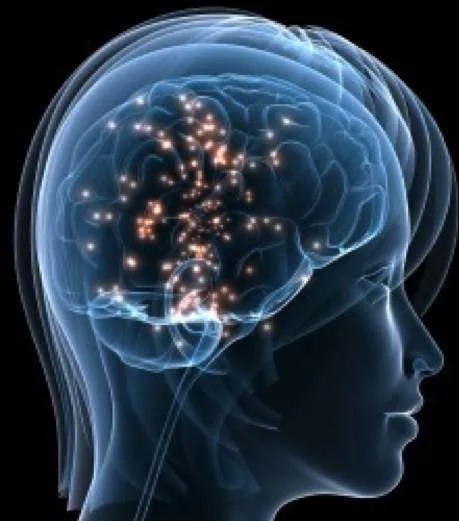
- Brain dysfunctioning, such as flushes, brain fog, memory problems, and not feeling or functioning well
- Sexual problems
- Weight gain, probably related to gut microbiota and the estrabolome
HRT effects
- some are direct estrogen effects with an effect within weeks e.g. vaginal dryness
- some require structural changes with effects after 2-3 months e.g. brain effects requiring the growth of brain connections


Advantages
mental tonic effect -feeling better
less alzheimer
Better collagen, better skin (wrinkles), looking younger, less osteoporosis and less pelvic floor descent
less cardiovascualr incidents and lower mortality. Women with ovaries or HRT live longer.
Cancer risk
50% less bowel cancers
less endometrial cancers
not more breast cancers but a faster growth of existing cancers
- 6-8 years earlier detection
- but less aggressive since more cancers are estrogen receptor positive
- thus probaly a lower mortality
- and our suggestion not to be too aggressive when a mammography is suspicious
Common Questions About HRT
What are the contra-indications?
Who can benefit from hormone replacement therapy?
Are there risks associated with hormone replacement therapy?
How long should hormone replacement therapy be used?
As long as you need glasses to read
muscle and joint pain
Quotes signaling incompetence or ignorance.
I do not like hormones
I am opposed to hormones
Hormone replacement is risky
Hormones increase the risk of breast cancer
How to check your doctor's competence?
Ask which plasma concentrations he expects with 1mg of estradiol
ask him what the minimal effective dose is of the progesterone you take
ask whether half the dose of progestin would be enough for you
Is sport and food intake important
Absolutely yes although our understanding is limited. Elements to consider are
The information is Bayesian or learning from past experience, which is similar to how cooking develops. This is the problem with integrating traditional chinese medicine or acupuncture. Read one of my last publications on Bayesian statistics and endometriosis . In the 1980s, after visiting many beauty centers, I came to the conclusion that it was effective, but being a Bayesian learning it was unclear whether all elements were effective.
A new and rapidly deveoping field is the close relationship between bowel microbiome, brain function, food intake, hormones, the sympathetic nerve function and the nervus vagus. In brief
- keep a balanced food intake with sufficient fibers and with sufficient color since color equals anti-oxidants i.e. fruit and vegetables
- the microbiome varies with hormone intake.
- The microbiome varies with body weight
- Exercise changes the microbiome, the nervus vagus and the sympathetic nerves, besides cardiovascular fitness and muscles

What women Say

What women told after 3 months of therapy
I shout at the children ….but I am happy. I feel like before
Nice pills, but now my husband also needs something

A telephone from a singer of the London opera ‘ I can sing again’ My voice recovered
Explore Our Latest Insights
Premenstrual syndrome
Understanding of the premenstrual syndrome highlights the individualisation of therapy with an understanding of individual vairiability of brain effects.
Beauty centers and hormone replacement therapy after menopause
Hormone replacement therapy in menopause and beauty centers should work together since they have a common goal.
Endometriosis and sexuality
Sexual problems in women with endometriosis have many causes besides endometriosis. Some of these are inappropriate medical and surgical therapy
Stay Updated with Our Blog
The Truth About HRT
Don’t let misconceptions guide your decisions.
You must be logged in to post a comment.